For dog owners planning an international move. Airline examples apply to Air Serbia and Lufthansa, not to every operator. Check entry and transit requirements separately for each country. This guide does not cover assistance dogs.
Start with the options your dog can actually use
For a large dog, the search starts with their details. Record breed, age, weight and measurements taken in a natural standing position. Add what you already know about travel: difficulty being left alone, previous trouble in a car or unfamiliarity with a crate. Discuss fitness to travel and conditions that affect the choice of transport with your veterinarian before buying tickets.
Then make a shortlist of feasible options. Each needs an actual operator, a date or date window, and a defined way for your dog to travel. An airline accepting animals in general does not establish that the service exists on your particular leg.
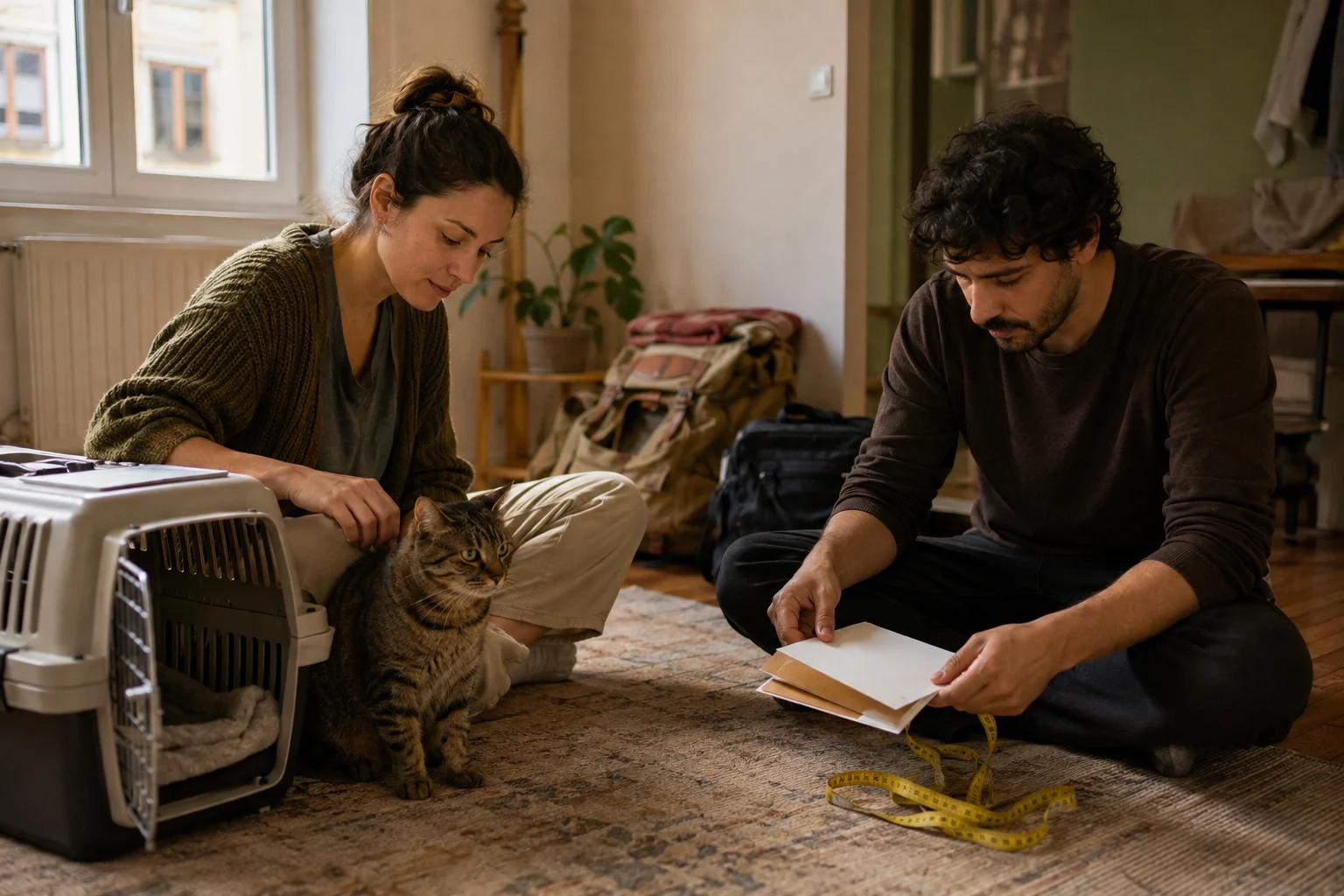
Include the family and belongings from the start. The crate, two adults and their suitcases must fit in the airport transfer. A road operator needs the luggage volume before quoting, or the offers will describe different journeys. Photograph the belongings together to catch omissions such as a folding crate or an extra large suitcase.
Cabin, checked animal and cargo are different bookings
Air Serbia limits ordinary cabin pets to 8 kg including the carrier, with combined carrier dimensions of no more than 94 cm. Pet acceptance needs confirmation. This excludes a large dog. Lufthansa also excludes dogs weighing more than 8 kg with their container from ordinary cabin pet carriage.
A dog checked into the hold as part of a passenger journey and an animal sent as cargo have different booking and handover arrangements. Name the service in your enquiry. If an agent simply says they can arrange a flight, ask where you hand over the dog, who collects them and which document confirms the order. Those details determine whether you need another transfer and whether the recipient can attend at the agreed time.
| Option | First question | Add to the plan |
|---|---|---|
| Cabin | Do dog and carrier meet every limit? | Pet confirmation on each flight |
| Checked animal in the hold | Is the dog confirmed on this particular flight? | Check-in, collection and connection handovers |
| Cargo | Who arranges dispatch and release? | Cargo terminal, recipient and a separate quote |
| Road | Where will dog, people and belongings go? | Breaks, driver rest and overnight stops |
Check the rule: Air Serbia: Traveling with your pets · Lufthansa: Animals as excess baggage
Check the crate against your dog, then the aircraft
IATA advises measuring an animal standing naturally and choosing space that allows natural standing, turning and lying down. An IATA-approved label does not establish acceptance: IATA does not certify individual crate models. Check the operator’s precise construction and size requirements.
Prepare two sets of information for approval: the dog’s measurements and the assembled crate’s details. Separate internal space from external dimensions, and photograph the door, fastenings and ventilation. Give the actual total weight with the crate and its fittings. A product size such as XL tells the person reviewing your request very little.
Avoid buying a non-refundable ticket on the assumption that you can find a smaller crate later. If a container that fits the dog cannot be accepted, the transport option needs to change. Give the airport transfer driver the external measurements too: the crate must pass through the vehicle door, not merely fit in a drawing of the luggage compartment. Agree whether the dog will use the same crate on the drive to the airport and how you will transport it after arrival.
Check the rule: IATA: Traveler's Pet Corner · Lufthansa: Animals as excess baggage
One connection can rule out the whole flight itinerary
At the check date, Lufthansa does not accept animals in the hold on connecting flights via Munich; connections via Frankfurt remain possible subject to confirmation. A bookable passenger itinerary is therefore not necessarily a workable dog itinerary.
Check the operating airline on every flight, beyond the seller’s logo. Establish where the crate goes during a connection, whether you must collect and check the dog in again, and who is responsible between flights. For a self-transfer, allow for collection, any journey between terminals or airports, and another check-in.
Ask what happens if the first flight is late: whom you contact, who arranges accommodation for the dog and what happens to the next leg. A general statement that everything is in the reservation does not answer these questions. Keep confirmations available offline and make sure dates, destinations and animal details match. A missing response for the second flight is still a missing response, even when the first flight has been approved.
Check the rule: Lufthansa: Animals as excess baggage
Judge a road journey by the conditions inside the vehicle
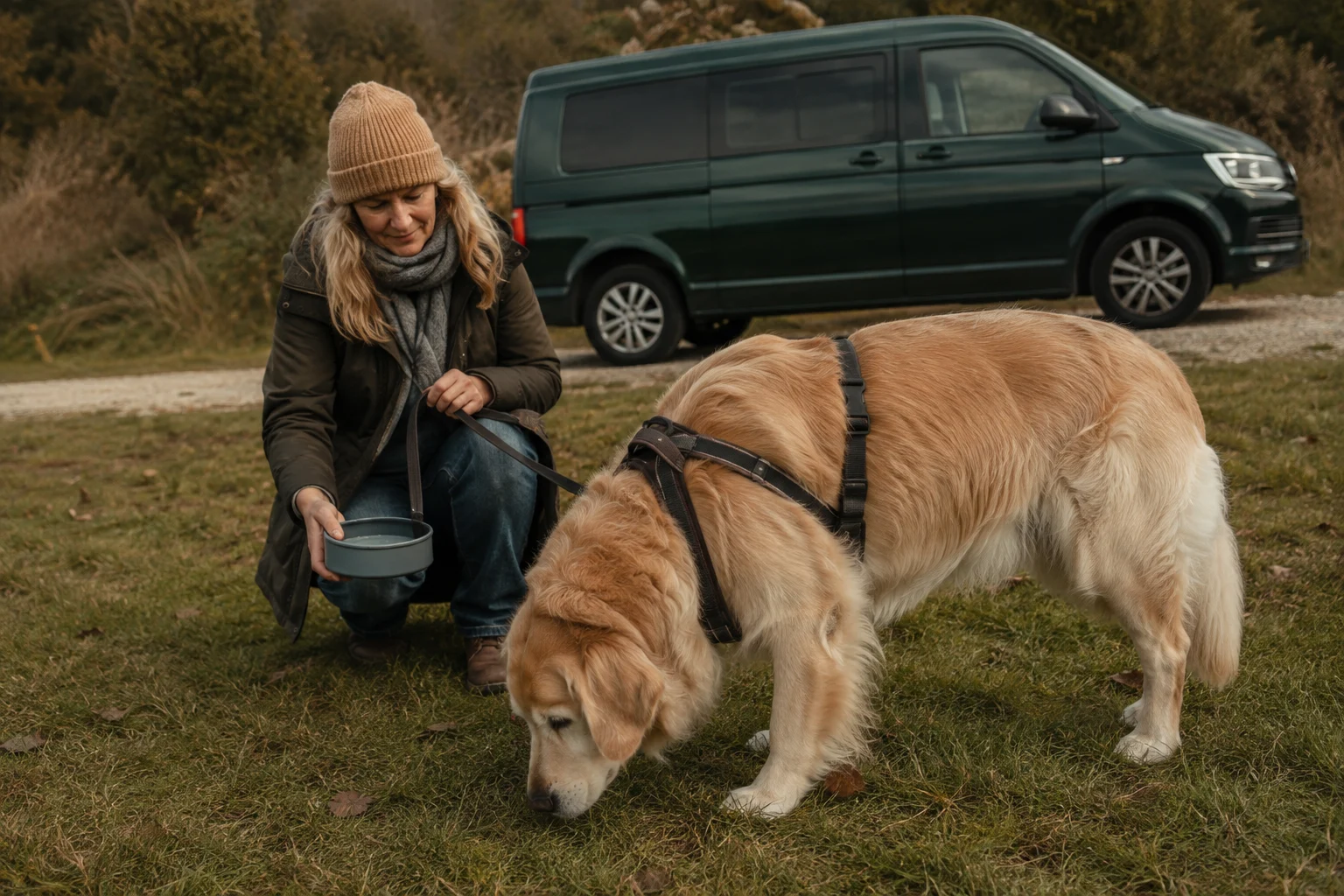
Being near your dog may matter a great deal to you. Travel duration, border queues, heat and driver fatigue still need to be considered. These factors do not support a universal claim that road travel is safer. Compare an actual vehicle and schedule with an actual flight arrangement.
Request a seating and luggage plan or photographs that show the available space. Ask about securing the crate or another agreed restraint, climate control during stops and access to the dog. If unfamiliar animals will share the vehicle, discuss separate accommodation before booking. A promise of sufficient space leaves the placement of your boxes unresolved.
An overnight stop also needs confirmation: hotel name, the number and size of dogs accepted, extra charges and check-in time. Ask how multiple drivers share the journey; for a single driver, find out where rest is scheduled. A promise to drive without stopping does not give you a usable plan for rest or animal care.
Count time apart and the full journey to your new home
Draw two timelines with the same start and finish: leaving your present home and entering the new accommodation. For a flight, include the airport transfer, time before departure, animal handover, connection, collection and final drive. For a road journey, include borders, walks, rest and overnight stops. Two hours in the air cannot usefully be compared with an entire road journey.
Mark the periods when you cannot approach your dog and the number of handovers between people. This is a prompt for questions about care, not a ready-made risk score. Leave unknown periods visible rather than filling them with assumptions.
Check the final leg carefully. Who meets a late flight? Will the crate fit in the booked vehicle? Does the accommodation allow late arrival with a dog? An extra night may make the itinerary workable, while relying on the final transfer of the evening makes any delay consequential. Consider that overnight stay together with its cost and cancellation conditions.
Request change terms together with the price
Give every operator the same journey description. Ask them to distinguish confirmed prices, provisional estimates and charges triggered by particular events. An air budget should include the crate, animal carriage, passenger luggage, both transfers and any accommodation. A road budget should include hotels, agreed stops and loading assistance if required.
Request written answers to the questions below alongside the quote. They define the service before payment and remain useful if the itinerary changes. When comparing offers, record which answers you have already received and which still need agreement.
- Who operates each leg and where does their responsibility end?
- Which dog, crate, passenger and luggage details does the price cover?
- What happens if the vehicle, aircraft or date changes?
- How is waiting charged and who approves additional costs?
- What is refundable if the operator refuses to accept the animal?
- Who arranges the next overnight stay or leg if the journey is interrupted?
When an option fails, work on the actual constraint
The reason for rejection determines the next step. No animal space on the flight: check another date window. The required crate is too large: look for an operator and aircraft that accept its dimensions. An unconfirmed connection: investigate a different hub or a direct flight with a road leg. Documents cannot be ready: revise the moving date and accommodation together.
Do not solve a size restriction by putting the dog in an unsuitable smaller crate. Discuss travel medication with your veterinarian; IATA advises against sedation for air transport because of possible adverse effects.
To discuss a route with MIRNO, prepare the cities, date window, passenger count, dog’s breed and measurements, crate dimensions and luggage volume. Include refusals you have already received to narrow the search. A useful comparison ends with confirmed transport, an understandable complete cost and arrangements for a delay. If an essential leg remains unconfirmed, the journey is still awaiting a decision.
Check the rule: IATA: Traveler's Pet Corner
Sources and further reading
Before booking, recheck conditions for your countries, dates and operators.
Put this into your plan
- Pre-booking checklist
Tick completed preparation steps and print the list before your journey. - A ground route with pets
What to discuss about the vehicle, companion, stops and space for several animals. - Destinations from Russia
Serbia, Georgia, Armenia, Türkiye and EU countries: where to start checking a specific journey.